Tavern Keeper is the management sim of my dreams and the standout early access game I’ve played in 2025.
Published: 25/12/2025
Article

(Image credit: Future)
As part of its ongoing Game of the Year Awards 2025 coverage, the PC Gamer team is highlighting individual titles that left a lasting impression this year. One such standout is Tavern Keeper, an early access management simulation that offers far more than simply running a fantasy pub.
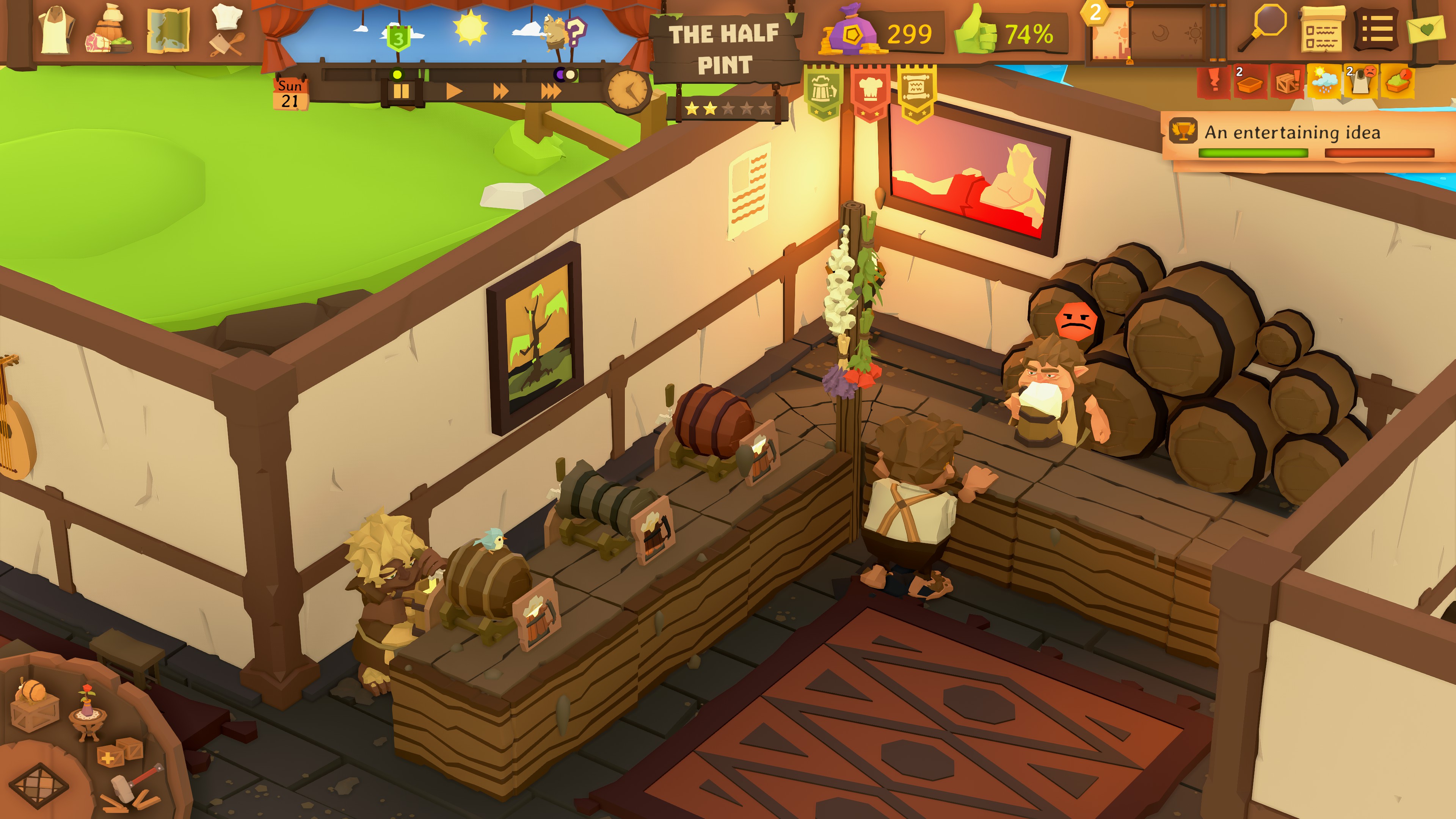
In the game, players build and manage a tavern in a cozy, Tolkien-inspired world. My own establishment, The Half Pint, serves patrons from across the Shire and has grown into a thriving business thanks to careful planning and a steady supply of wine, ale, and ethically sourced skewers. Live music, questionable comedians, and a constant stream of unpredictable customers keep the tavern lively and profitable.
While the business mechanics are solid and engaging, complete with challenges such as unruly guests, demanding parties, and temperamental staff, the true obsession lies elsewhere. Tavern Keeper’s interior decorating system is what truly sets it apart.
(Image credit: Greenheart Games)
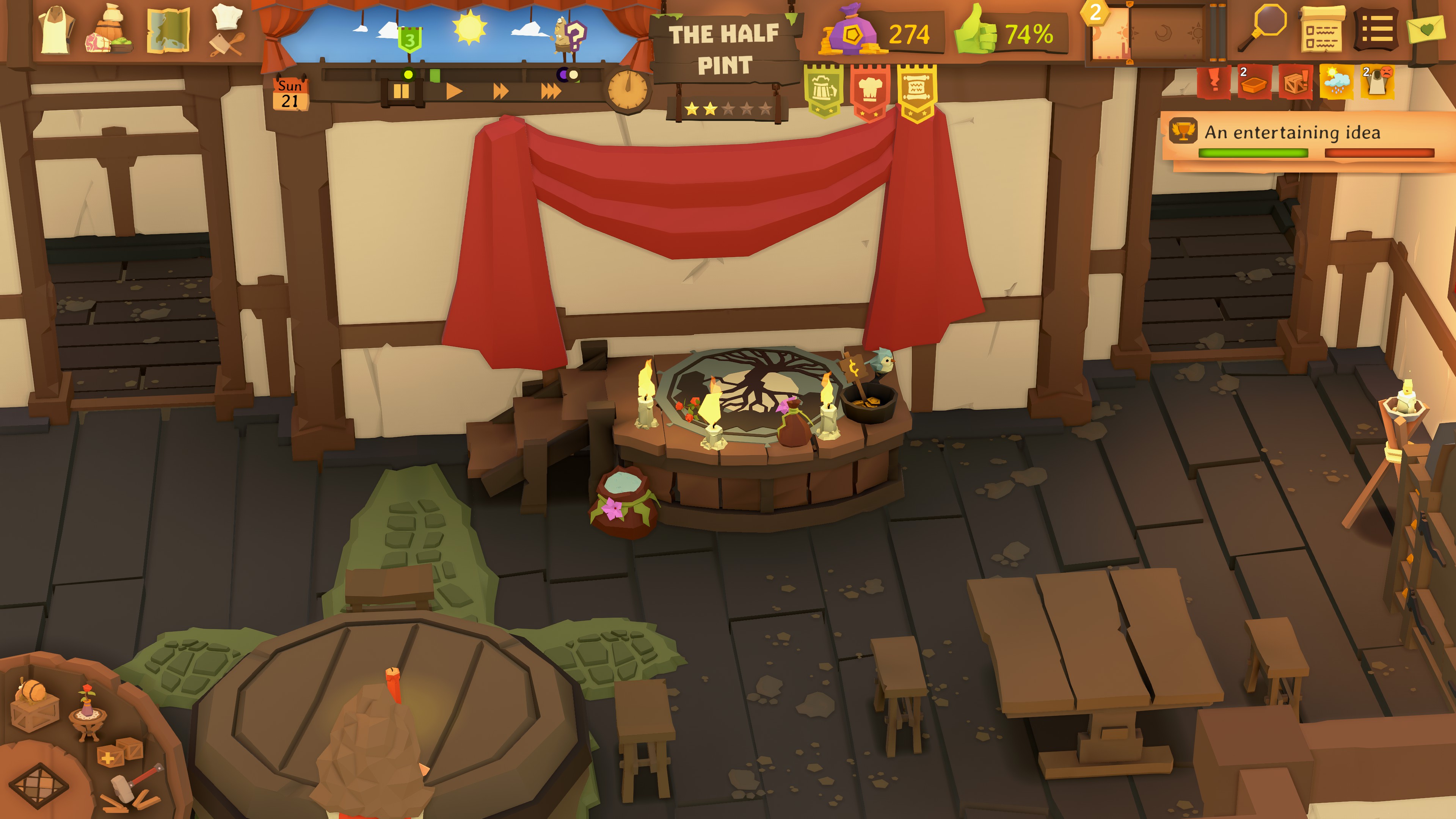
Every object placed in the tavern can be extensively modified. Players can resize items, recolor them, and combine multiple objects into entirely new creations. In one early experiment, a sword embedded into a bar was topped with a raven and transformed into a functional light source. In Tavern Keeper, almost anything can become a lamp if you are creative enough.
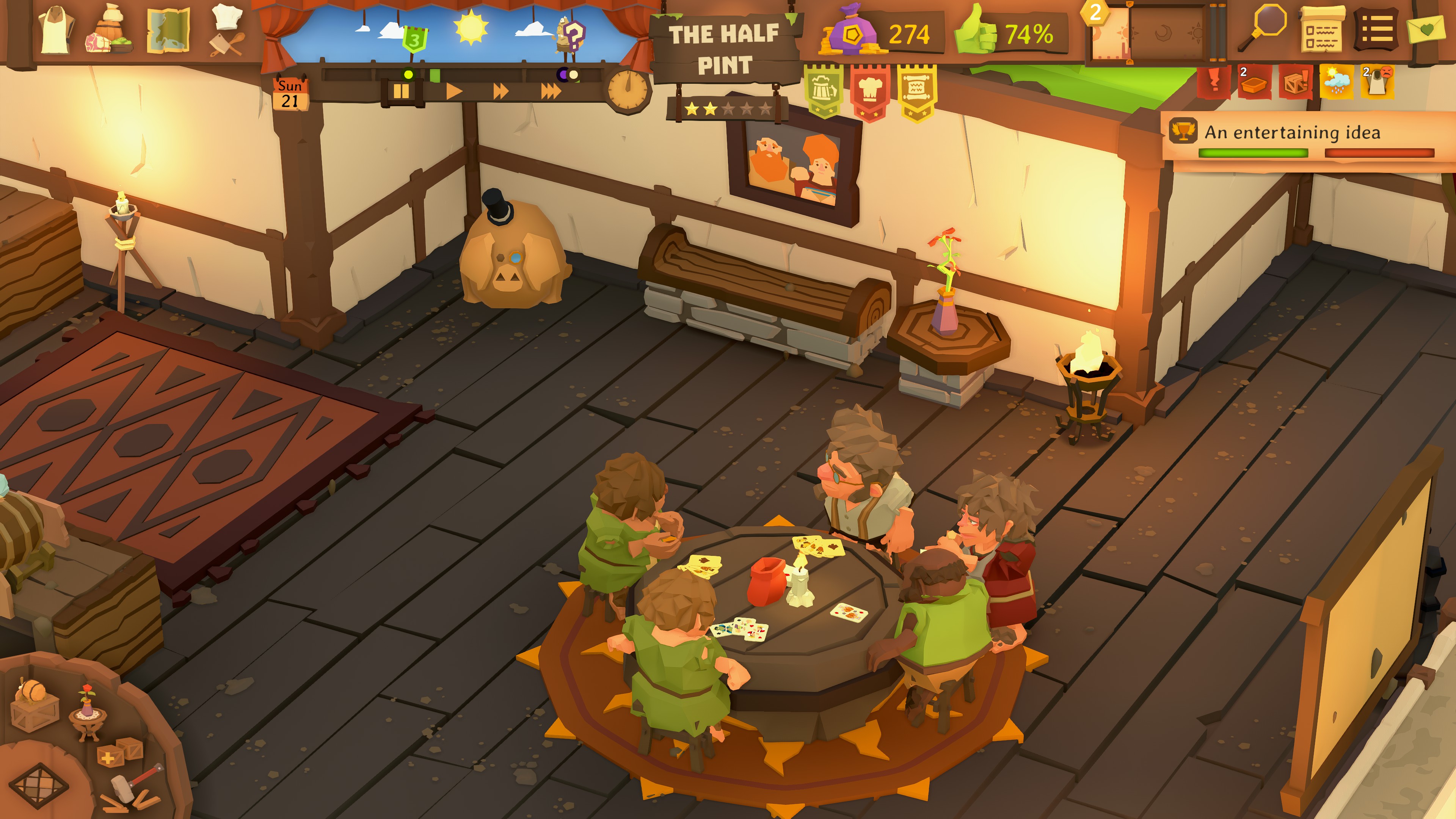
The Half Pint maintains a warm, weapon-free atmosphere, but creativity still thrives. A custom-built poker table came together in minutes, and the tavern proudly displays a statue of its celebrity patron, Sir Porkly of Baconshire—a carved wooden pig adorned with a top hat. These small, absurd touches give each tavern a distinct personality.
As players progress through the campaign, new decorative items are unlocked through story events or rewarded by satisfied patrons. For those who prefer pure creativity, a workshop mode provides access to every object in the game, removing the need to manage finances and letting players focus entirely on design.
(Image credit: Greenheart Games)
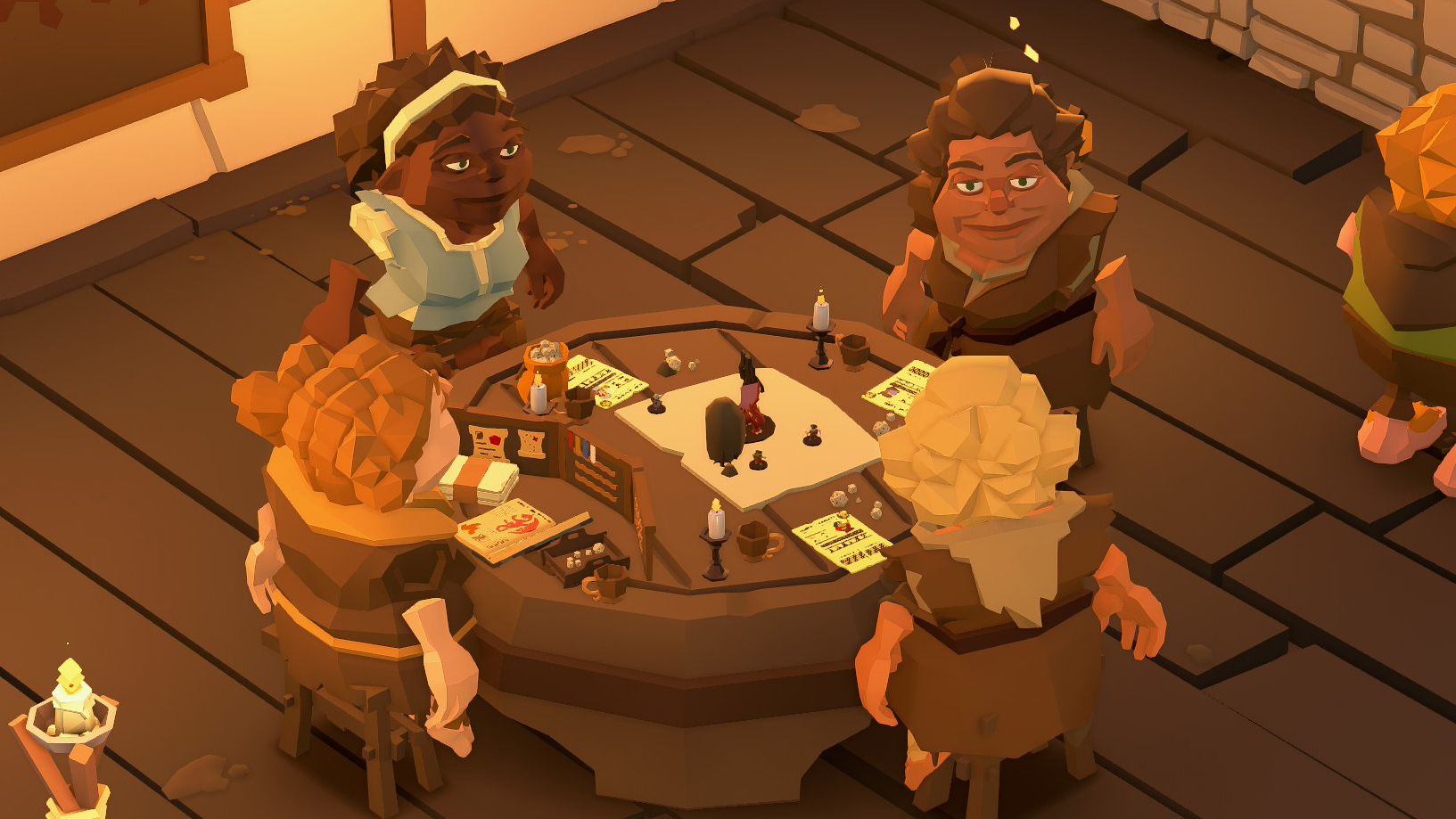
The community has already taken full advantage of this freedom. Players have created intricate spaces such as tabletop gaming areas complete with readable character sheets, and even in-universe recreations of magazines and props. The game’s permissive design philosophy treats object clipping as a feature rather than a flaw, enabling elaborate and imaginative constructions.
Once a creation is complete, players can link its components together and reuse it across multiple taverns. Designs can also be shared online, allowing others to incorporate community-made creations without investing hours into detailed decoration themselves.
(Image credit: Greenheart Games)
Although decorating is the main draw, Tavern Keeper’s charm would not be as effective without its strong narrative elements. Periodically, visitors arrive to engage the player in fully voiced conversations that introduce quests or humorous side stories. All dialogue is delivered by a narrator who enthusiastically performs every role, adding warmth and personality to even the smallest interactions.
Some storylines are lighthearted, such as a halfling staff member aspiring to perform stand-up comedy, while others cleverly explore player agency. One early encounter involves a guild representative attempting to force the player into joining. Repeated refusals escalate into a long negotiation filled with skill checks and bargaining, culminating in the game abruptly closing when the player pushes back too hard.
(Image credit: Greenheart Games)
Reloading the save does not simply reset the moment. Instead, the narrator acknowledges the player’s resistance before guiding the story forward, preserving the illusion of choice while still maintaining narrative structure. It is a small but effective example of how Tavern Keeper balances freedom with storytelling.
With its relaxing pace, playful humor, and deep creative systems, Tavern Keeper feels especially well-suited for long holiday sessions. It is a game about building a welcoming space, filling it with personality, and occasionally ignoring the outside world in favor of one more perfectly placed piece of furniture.

(Image credit: Greenheart Games)